🔴 Webb's 'little red dots' may be baby black holes
New simulations suggest the mysterious red specks spotted with NASA's Webb telescope are young galaxies where the first giant black holes were forming.
The mystery
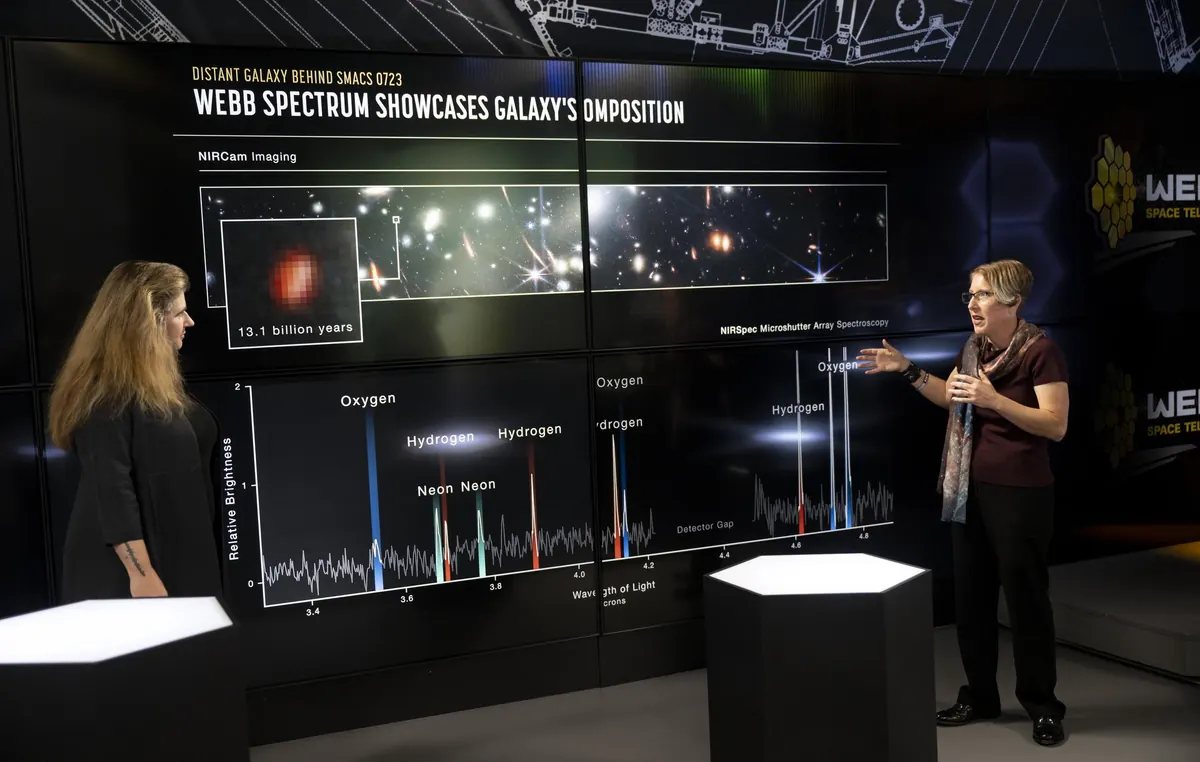
NASA's Webb telescope has found hundreds of tiny, bright red objects in the early universe. Each is just a few hundred light-years in size yet shines like a big galaxy, and they give off almost no X-rays. What could they be?
The answer
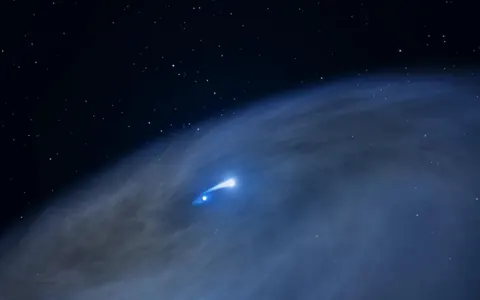
A team led by Daniel Whalen of the University of Portsmouth ran detailed computer simulations of the young universe. Their models suggest each red dot is an early galaxy where a gigantic primordial star collapsed straight into a black hole of roughly ten million Suns. That black hole stays buried inside the thick disk of gas that formed it: the gas blocks X-rays but lets some visible and infrared light out, while a crowded star cluster next to it adds the bluish part of the light. The result matches what Webb sees.
Now think about this
If these dots really are where the first supermassive black holes were born, which came first in the young universe: galaxies or their giant black holes?